
Cameron Parish Projected Versus Actual Release
A projected release date is a calculated future point based on the sentence data, law, and credits then in the record. It may move. An actual release date records the custody event after it occurs. Neither one should be replaced with a booking date, bond payment time, parole eligibility date, hearing date, or parole grant.
Custody stage controls whether a date should exist. Someone awaiting trial in Cameron Parish Jail has not received a final custodial sentence to compute. Bond, dismissal, a court order, another hold, or a transfer can determine what happens next. For a sentenced person committed to Louisiana DPS&C, the agency calculates time after it receives the official court papers. A local jail sentence should be checked with the jail and 38th Judicial District Court rather than estimated from the arrest date.
The distinction is also vital after a Cameron transfer. Ending local jail custody can mean movement into state, federal, immigration, or another parish's custody. It does not always mean community release.
Release type matters as much as the date. Bond ends local detention subject to court terms while the criminal case usually remains open. Time served or sentence completion rests on the sentence, lawful credit, and agency release entry. A court-ordered release should be matched to the minute entry or signed order. Transfer ends Cameron Parish Jail custody but carries the person into another authority's system. None of those events can be reconstructed safely from a name vanishing from the current roster.
Find a Cameron Parish Projected Release Date
The confirmed Louisiana channel for a state prisoner's prospective date is the DPS&C automated offender-information telephone line. The agency says it can return a “projected release date (if applicable).” Its web locator opens Louisiana VINELink, but the research did not verify that every web result displays that same future field. Use the label actually shown and do not turn a historical release date into a projection.
- Determine the custody system. Ask whether the person is in Cameron Parish Jail, committed to DPS&C, held federally, or with another authority. The systems do not share one release calendar.
- Gather a reliable identifier. A DPS&C number is best for the state line. Otherwise use the legal name and date of birth. For a local record, use the booking or Cameron case number when known.
- Call DPS&C for state time. Use 225-383-4580 and supply the DPS&C number, or the name and date of birth. Record the exact projected-date wording and access date.
- Check the web status. Follow the official DPS&C offender-information page to Louisiana VINELink. Compare the identity, custody or supervision status, location, and any dated field that actually appears.
- Use local records for local custody. Call Cameron Parish Jail at 337-775-2125. Obtain the sentence, jail-credit ruling, release order, and commitment record from the 38th JDC when the person remains a parish detainee.
- Resolve a missing or disputed calculation. DPS&C lists its time-computation information line as 225-342-0799. Compare the calculation with the sentencing paperwork rather than producing a private estimate.
The Cameron Parish released-inmate search gives the broader path when the correct custody system is still unclear. A short Cameron jail stay does not ensure that a DPS&C result exists.
Federal timing requires a different source. The BOP locator can show a projected future date or a past release date for a federal record, but that does not belong to the Louisiana calculation. ICE detention and U.S. Marshals custody have still other confirmation routes. Use them only when the case or movement record points to federal or immigration custody.
Note: Use the DPS&C number when possible because names, aliases, and dates of birth can match more than one record.
Missing Cameron Parish Release Calculations
A date may be absent soon after sentencing. The DPS&C frequently asked questions explain that computation depends on receipt of official paperwork from the sentencing court. If the commitment, sentence, offense classification, jail credit, or amended order has not reached the time-computation staff, the calculation may not be complete.
For a Cameron sentence, confirm that the 38th JDC record contains the signed judgment and commitment material. Then ask the responsible records or time-computation office whether the documents were received. A booking record is insufficient. It may show arrest and jail facts, but it does not contain every legal input used for a state sentence.
The official DPS&C information page describes the phone locator and its projected-date response.
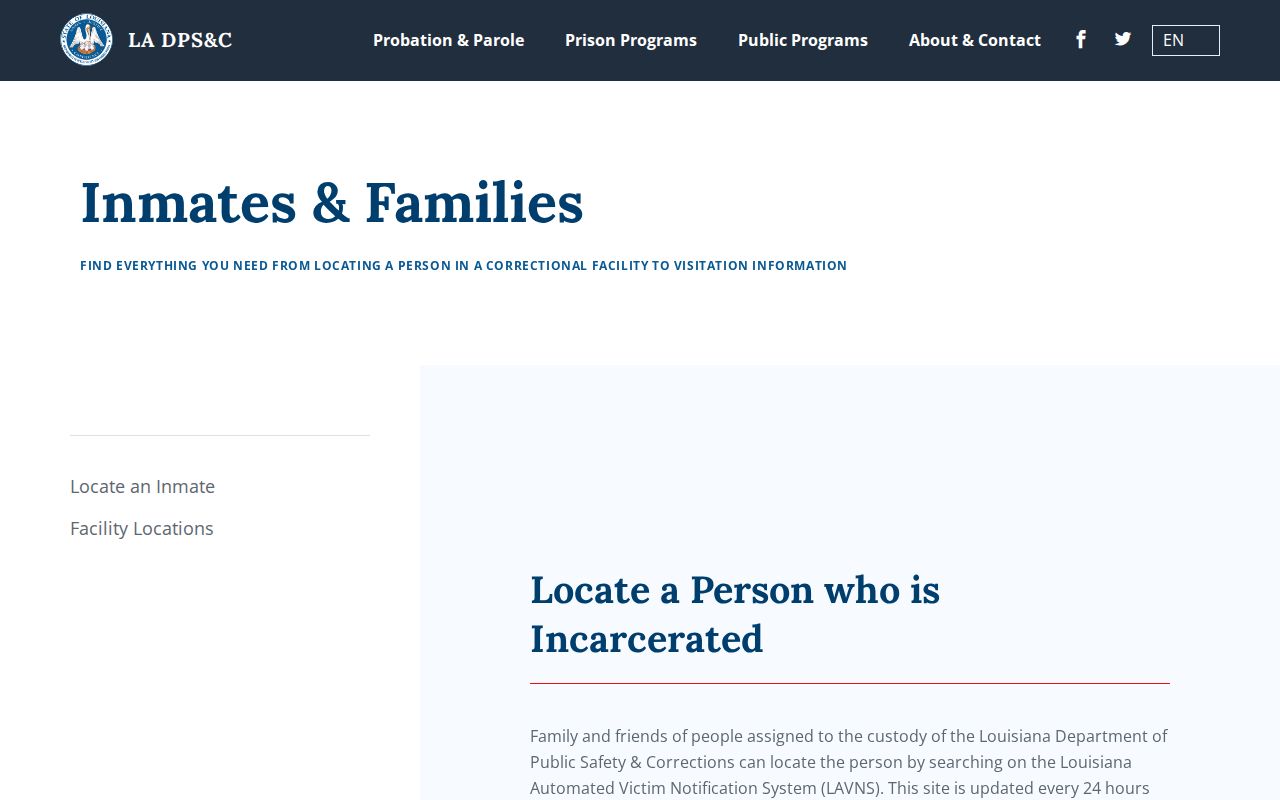
The captured agency guidance supports the telephone route and keeps the future date tied to an official calculation.
If Cameron Parish Jail still holds the person on a local sentence, ask for an existing release or time-computation record rather than asking staff to predict the outcome. The Cameron Parish Sheriff is not the correct office for a state sentence after commitment to DPS&C. Likewise, DPS&C should not be treated as the source for every pretrial Cameron booking. The commitment or movement record establishes when responsibility shifted.
Cameron Parish New-Offense Good Time
Louisiana R.S. 15:571.3.1 applies to offenses committed on or after August 1, 2024. For an otherwise eligible felony offender in parish prison or DPS&C custody, the statute allows ordinary good-time diminution up to 15 percent of the imposed sentence. That is often described as an 85 percent service floor for the covered sentence. It is not a universal rule for every Louisiana prisoner.
The provision excludes sex offenses defined by R.S. 15:541 and habitual-offender sentences under R.S. 15:529.1 from that 15 percent rule. It also addresses other credits, forfeiture, split-sentence issues, and authority held by the Secretary. The offense date, conviction category, sentence structure, and exact statute must be known before the rule can even be selected.
Article 880 jail credit is another reason not to multiply the imposed term by a percentage. The newer provision states that credit under its section is not earned on time credited under that article. The agency must place each period of confinement and each lawful credit in the correct part of its calculation. A simple sentence-length formula cannot do that work.
The current statute can be checked on the Louisiana Legislature's R.S. 15:571.3.1 page.
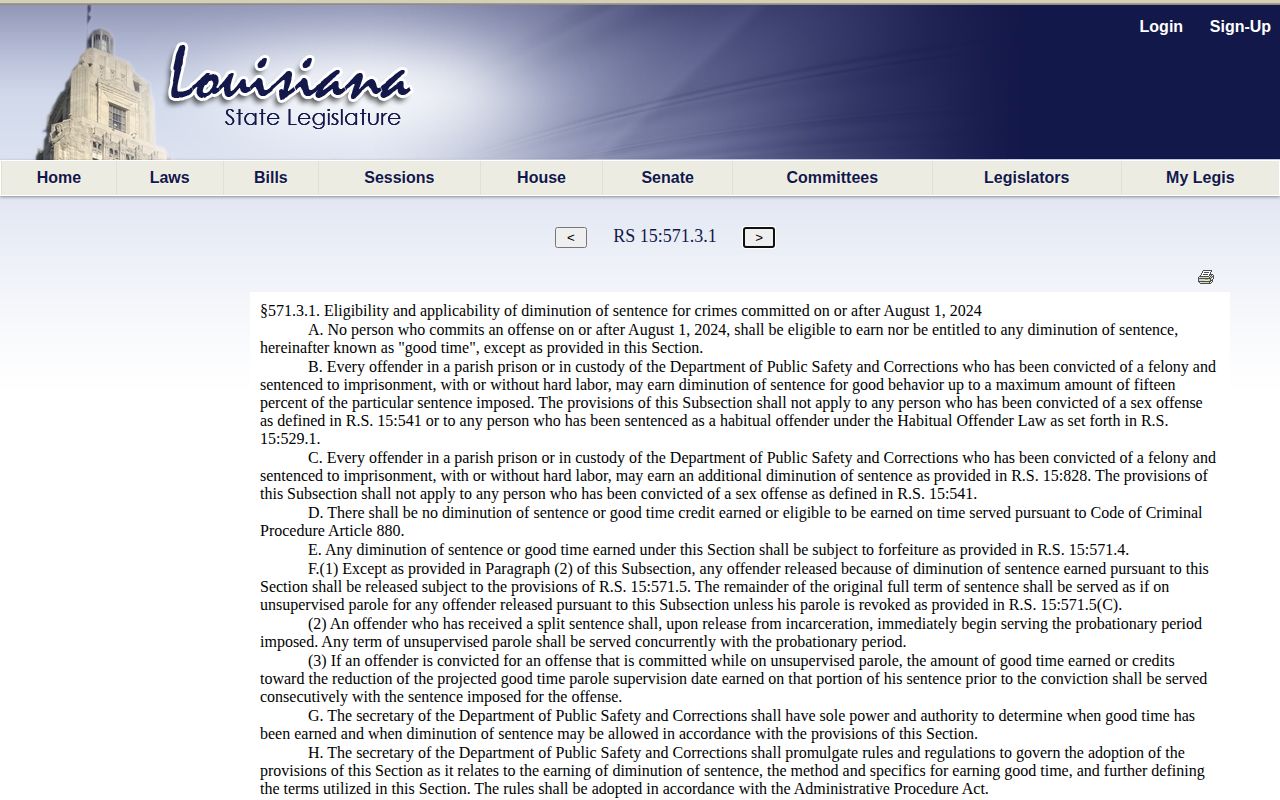
The statutory text shows why the offense date and exclusions must be checked before anyone describes an 85 percent floor.
Note: DPS&C performs the individual computation; a public statute summary cannot supply a reliable release date for one person.
Cameron Parish Older-Offense Rules
R.S. 15:571.3 governs covered older offenses and points later offenses to the newer law. Its rates vary by sentence, custody type, offense history, and other classifications. For many covered parish-prison sentences without hard labor, the law includes a 30-for-30 structure. A first crime-of-violence conviction can fall under a different 3-for-17 rate. Exclusions and other provisions apply.
Those fractions should not be used as a Cameron Parish calculator. Jail credit, concurrent or consecutive terms, the commitment wording, and the law in force for the offense may alter the result. R.S. 15:571.4 deals with forfeiture and progress toward a projected good-time parole-supervision date. R.S. 15:571.5 addresses release by diminution under covered legacy rules.
The Legislature's diminution-of-sentence text provides the underlying older framework.
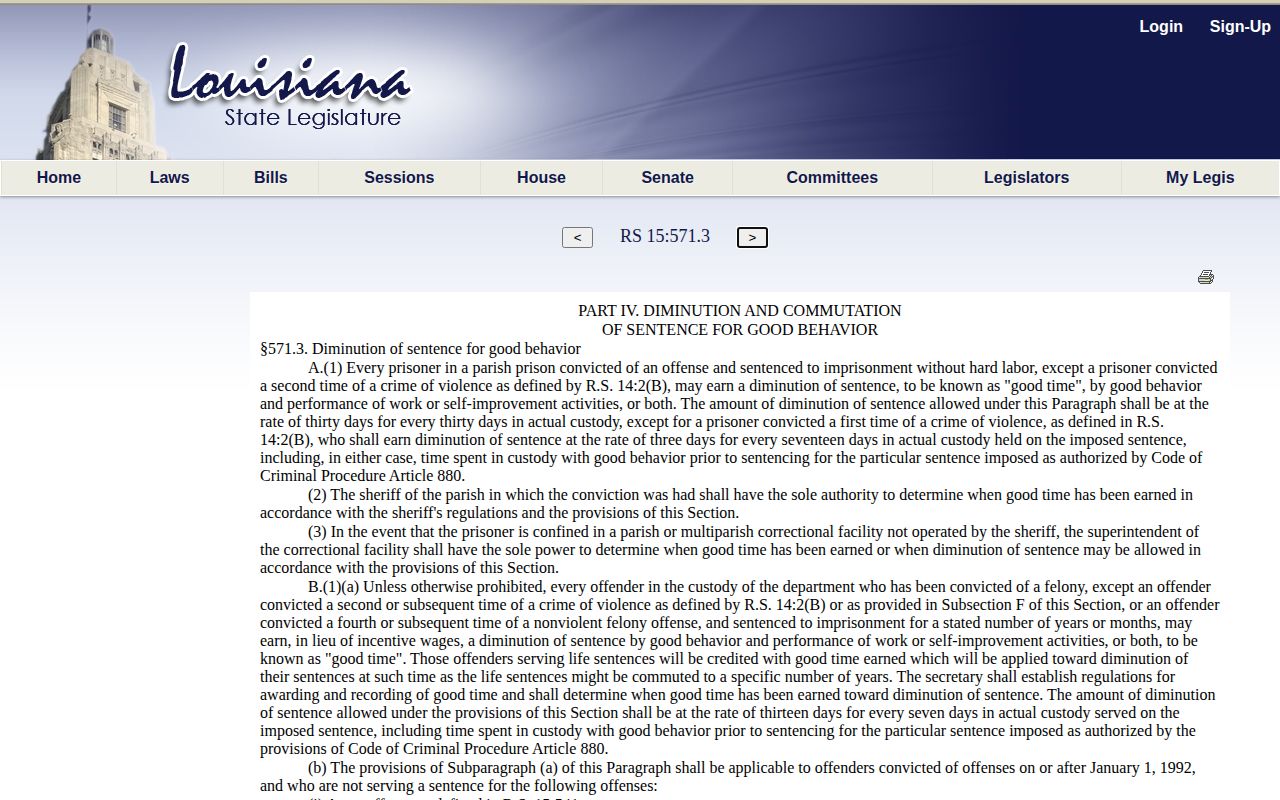
The law's categories reinforce why DPS&C, not a hand calculation, must supply a named person's projected release date.
Cameron Parish Parole Dates Differ
A parole eligibility date, hearing date, decision, projected good-time date, and physical exit are separate events. Under R.S. 15:574.4.3, offenses committed on or after August 1, 2024 are generally not parole eligible except for the specialized exceptions listed in the statute. Older and category-specific eligibility rules appear in R.S. 15:574.4.
Eligibility permits the Committee on Parole to consider a case. A hearing may be scheduled before the eligibility date. Even a grant can precede the date and leave a release plan, detainer, or processing step unresolved. Verify the decision in the board docket, then check the later DPS&C status and assigned supervision office.
A denial does not rewrite the whole sentence calculation. Likewise, a projected date does not show that parole was granted. Each record answers its own question.
Cameron Parish Release Dates Can Change
DPS&C can revise a calculation when legal or factual inputs change. A court amendment may alter the sentence itself. Credits may be earned, lost, restored, or corrected. Another agency may place a hold that affects where the person goes even if the Louisiana confinement term reaches its end.
| Factor | Possible effect | Best source |
|---|---|---|
| Corrected court papers | Changes a term, jail credit, or concurrent versus consecutive structure. | 38th JDC order and DPS&C time computation. |
| Good-time earning or forfeiture | Moves a prospective diminution date under the applicable statute. | DPS&C calculation and disciplinary credit record. |
| Program or other credit | May alter the calculation when authorized for the sentence. | DPS&C record and governing provision. |
| Parole action | Creates a separate decision path, not an automatic exit. | Committee decision followed by DPS&C status. |
| Detainer or warrant | May cause transfer rather than community release. | Holding agency and movement record. |
| Data correction | Fixes an identifier, date, or computation input. | Agency that created the disputed field. |
When two dates conflict, save both labels and update times. Compare them to the sentencing documents and ask the agency responsible for computation. Do not select the earlier date merely because it is more favorable.
Corrections can also follow the opposite path: a date may move later after a forfeiture or move earlier after a restored credit or corrected paper. That change does not by itself show agency error. Request the record supporting the revision, identify the disputed field, and provide the underlying court order when asking for a correction. DPS&C can explain its own computation; the 38th JDC can authenticate its own sentence and amendments.
Confirm Cameron Parish Actual Release
A future date is not a release certificate. For Cameron Parish Jail, call 337-775-2125 and request the booking-and-release or transfer record. For a state prisoner, compare the DPS&C result with Louisiana VINE and ask the responsible agency about the completed event. The Cameron Parish VINELink inmate search can also register an alert for offered custody changes.
The Cameron Parish Sheriff's Office, led by current Sheriff “Chris” Savoie, records local jail events. Its staff do not compute a DPS&C state sentence, so a Cameron release inquiry must stay with the office responsible for that stage.
VINE updates are aids and may lag. A missing result does not prove release, and a released label does not rule out a transfer to another authority. If a court record, locator, and agency statement differ, match each source to its function: the court sets legal terms, DPS&C computes state time, and the jail or prison records the physical departure.
Ask for the actual release date and destination when maintained and public. A movement entry may show that confinement continued elsewhere. This final check converts an estimate into a documented custody outcome.
Note: A release alert can prompt verification, but the agency event record remains the stronger source for the actual date.